
 English
 français
 Deutsch
 español
 العربية
 中文
中文

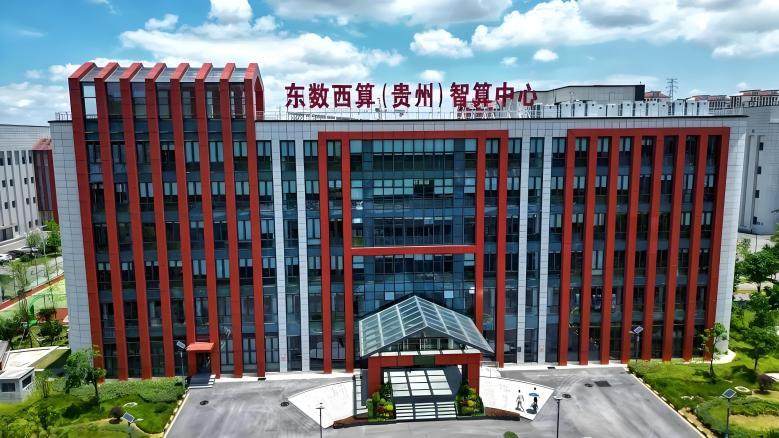
Application Case of APF&SVG in Data Center of Guizhou Telecom 1. Project Background In today's rapidly evolving digital economy, data centers serve as the "digital foundation" that handles core functions including computing power output, data storage, and business operations. Their stable, efficient, and green operation directly impacts corporate business continuity and market competitiveness. As the core facility of the national hub node in the "East Data West Computing" project, Guizhou Telecom Data Center has undergone a significant expansion since its construction began in 2013, growing from six to fifteen machine rooms. With a total planned investment exceeding 1 billion yuan and a floor area of 300,000 square meters, the center currently operates 15 data center buildings housing 14,000 racks and 120,000 servers. It has become the largest and most dynamic national computing power node in southern China. However, with the surge in AI computing demands, continuous expansion and upgrades have led to increased rack capacity, resulting in a sharp rise in high-density servers, liquid cooling systems, UPS power supplies, and variable-frequency air conditioners. These non-linear loads have gradually caused a series of power quality issues after operation, severely affecting operational efficiency and business security, necessitating comprehensive governance measures. II. Hazards of Power Quality Issues Severe harmonic pollution has caused frequent equipment failures. Devices such as UPS systems, switching power supplies, and liquid cooling circulation systems generate excessive harmonics, resulting in grid voltage distortion with a harmonic distortion index (THDi) reaching up to 24%. This has led to frequent instantaneous server cluster outages and false alarms in precision monitoring equipment. A notable incident involved a temporary disruption in computing power scheduling due to harmonic interference, directly impacting the eastern computing power's ability to handle business. These issues have caused brand damage and economic losses for the center, severely eroding customer trust. Excessive reactive power loss and soaring operational costs: Data centers experience significant load fluctuations, particularly during AI server cluster startups and liquid cooling system activation, which generate substantial reactive power surges. This results in a power factor as low as 0.81, not only increasing line losses (11.5% loss rate) but also incurring hefty reactive power penalties from grid companies, adding over 1.7 million yuan in annual electricity costs. Moreover, reactive power loss causes equipment overheating, further straining cooling systems and hindering PUE optimization. These issues contradict the center's green and low-carbon development goals, as well as the "dual carbon" strategy and requirements for green data center construction. Reduced equipment lifespan and increased O&M costs: Harmonic currents continuously impac...
View More
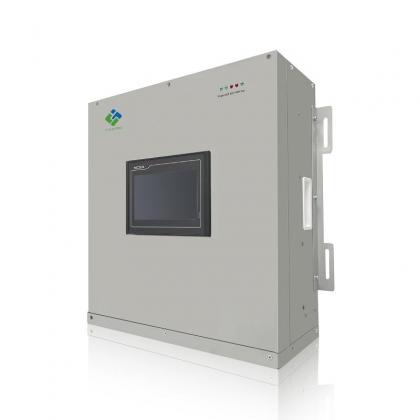
YTPQC-HPFC hybrid Static Var Generator adopts the configuration scheme of combining YTPQC-ASVG Advanced Static var Generator and switching capacitor/reactor, and implements different reactive compensation schemes according to the actual needs of users on site, so as to achieve the best combination of price and effect. YTPQC-HPFC hybrid reactive power compensation device consists of two parts: Static Var Generator and switching capacitor / reactor reactive compensation unit. In YTPQC-HPFC hybrid dynamic reactive power compensation device, each unit is designed and produced in the method of low power, small volume and low cost, and both of them are optional, and can be combined in the best and flexible way according to the actual reactive state of the site, so as to achieve the optimum ratio of operation effect and cost. The Background Residential community power grids belong to low-voltage distribution networks, generally connected to large power grids by 11/0.4kV transformers. Most of the loads in the grid work at three-phase 480V and single-phase 2230V voltage levels, mainly small-capacity loads, such as air conditioners, refrigerators, and televisions. Machines and other household appliances. Most household appliances are non-linear loads, which generate a large amount of reactive power during use. The PQ Problem Reactive power is very important to the normal operation of the power grid system and load, but excessive reactive power has very prominent adverse effects. The specific manifestations are as follows: Increase equipment capacity: The increase of reactive power will lead to the increase of system current and apparent power, which will increase the capacity of generators, transformers and other electrical equipment and wires. Increase line loss: The increase of reactive power will increase the total current, thereby increasing the loss of equipment and lines, and the voltage drop of lines and transformers. The Solution YTPQC-HPFC Hybrid reactive power compensation is widely used in residential distribution networks. The compensation capacity is generally configured according to 30% of the transformer capacity, and the SVG capacity and capacitor capacity are generally configured according to user needs. The transformer capacity of a substation in a Shanghai community is 800kVA, and a 240kvar YT-CSVG hybrid dynamic var compensator is configured on site, of which the SVG capacity is 50kvar and the capacitor capacity is 190kvar. After the equipment is running, the on-site power factor rises from 0.90 to about 1. The Technical Performance The Photos Click here to view more applications.
View More
YTPQC-HPFC hybrid reactive power compensation adopts the configuration scheme of combining YTPQC-ASVG Advanced Static var Generator and switching capacitor/reactor, and implements different reactive compensation schemes according to the actual needs of users on site, so as to achieve the best combination of price and effect. YTPQC-HPFC hybrid reactive power compensation device consists of two parts: Static Var Generator and switching capacitor / reactor reactive compensation unit. In YTPQC-HPFC hybrid dynamic reactive power compensation device, each unit is designed and produced in the method of low power, small volume and low cost, and both of them are optional, and can be combined in the best and flexible way according to the actual reactive state of the site, so as to achieve the optimum ratio of operation effect and cost. The Background The automobile manufacturing industry is a typical heavy industrial industry, and its electricity demand has many characteristics, such as large power demand, lower power factor of electrical equipment, many typical nonlinear loads and impact load equipment, and high power quality requirements. The PQ Problem The automobile manufacturing industry is a typical heavy industrial industry, and its load is large, and there are also a large number of impact loads, resulting in a rapid load change, so that the traditional capacitor cabinet reactive power compensation cannot keep up with the load change. Considering the cost and practicability, the hybrid reactive power compensation method is generally used for reactive power compensation. The hybrid dynamic reactive power compensation device consists of two parts - SVG Static Var Generator and switching capacitor&reactor reactive power compensation part. For large-capacity, fixed reactive power, configure switching capacitors for compensation; for small-capacity, fast-changing reactive power, configure corresponding static var generator capacity for compensation; hybrid dynamic reactive power compensation ensures switching accuracy And the response speed at the same time improves the service life of the equipment. The Solution YTPQC-HPFC Yibin Kaiyi Automobile Co., Ltd. is the leading engine for Yibin to build a 100 billion-level automobile industry, and a pillar enterprise of vehicle production in Sichuan Province. In order to ensure the power quality of the enterprise, a large number of hybrid reactive power compensation devices are installed in the park for reactive power management. The following is a set of 200kvar SVG+400kvar hybrid Static Var Generator compensation device. After the equipment is running, the on-site power factor rises from 0.90 to about 0.99. The Technical Performance The Photos Click here to view more applications.
View More
Hybrid Var Compensator in Photovoltaic Power Generation Transformation YTPQC-HPFC Hybrid Static Var Generator can perform the following functions: Fast reactive power calculation module, can realize power factor calculation, static reactive power generator power calculation and other functions;The reactive power optimization distribution module can realize the functions of determining the switching control of the capacitor group and determining the reactive power output of the reactive power generator;SVG module, can realize the output voltage and current feedback control, PWM control selection and other modules;Human-machine interface module, can realize the LCD panel interface access function;DSP control module can realize signal acquisition, PWM output, human-machine interface function and external communication functions. In the reactive power optimization distribution module, the device adopts SVG and TSC mixture for reactive power compensation, SVG detects the reactive power system, controls the capacitor switching, and determines the capacity and moment of reactive power generation. The Background Shanghai Trust Electric Co., Ltd. due to the low power factor, will produce a certain amount of electricity charges (fine), last year a total amount of fines reached 30,000 yuan.At present, the company has added photovoltaic power generation equipment in the park, resulting in lower site power factor, more serious fines, and in recent months, electricity fines have reached 2~3W.The customer hopes to control the power quality of the park and solve the problem of electricity fee fine. The PQ Problem Capaciitor cabinet is used for reactive power compensation on site. Due to the ladder of capacitors compensation and slow response speed, reactive power cannot be quickly and completely filtered in the grid.In the case of a certain reactive power, the active power on the meter is small, the calculated power factor will be low, resulting in a fine. At the same time, we found that the harmonic current content on the low voltage side of T1 transformer exceeded the standard. After field observation, we found that the harmonic is generated by the capacitor in the capacitor cabinet. After the capacitor is put into the grid, the resonance leads to harmonic amplification.Harmonic current will also lead to power factor reduction, and has great harm to the capacitor, easy to cause capacitor damage. Site test report The Solution YTPQC-HPFC According to the actual situation on the site, in order to solve the problem of site fine, the reactive power in the 10kV system should be treated, and the compensation accuracy demand is extremely high, so the YTPQC-HPFC Hybrid Static Var Generator must be used to make reactive power compensation. At present, the remaining reactive power on site is about 200kvar. Considering a certain allowance and subsequent load increase, it is recommended to configure YTPQC-HPFC Hy...
View More


 IPv6 network supported